

An effective CFD analysis is not simply about running a simulation. It requires a clear workflow closely aligned with HVAC design objectives:
1. Define the evaluation objectives
Clearly identify the purpose of the simulation:
- Assess thermal comfort
- Evaluate ventilation effectiveness / air distribution
2. Build a CFD model that reflects reality
- Geometry of the space, furniture, heat sources
- HVAC systems (diffusers, AHU, FCU, etc.)
- Appropriate level of detail depending on the analysis objectives
3. Set boundary conditions and reasonable assumptions
- Airflow rate, supply air temperature
- Heat loads (occupants, equipment, lighting)
- Environmental conditions (outdoor climate, building envelope)
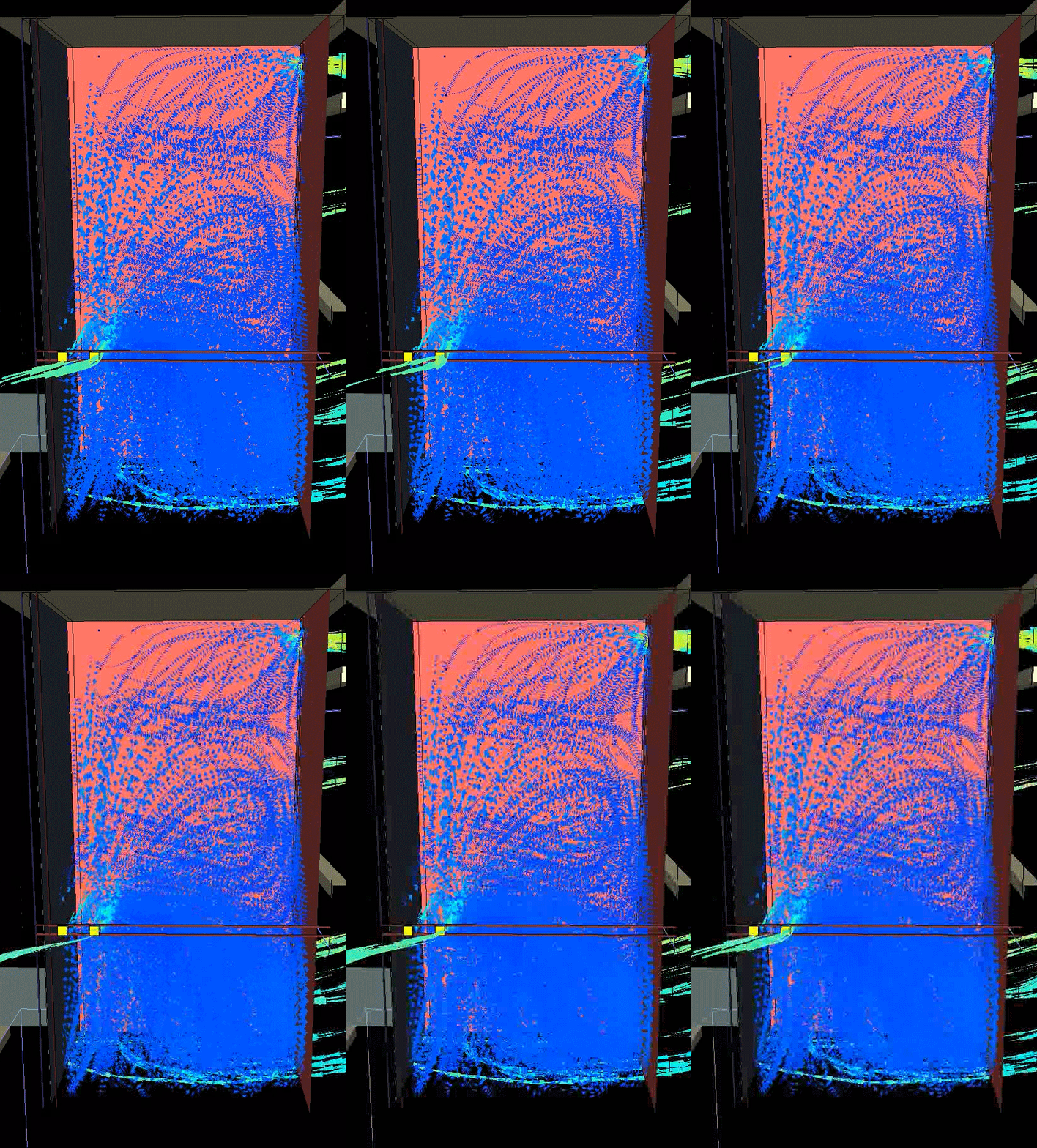
4. Analyze results within the occupied zone
Focus on areas where people actually stay:
- Air velocity
- Temperature
- Comfort indices (PMV, PPD if applicable)
5. Compare with standards (ASHRAE, ISO, etc.)
- Benchmark results against ASHRAE 55 or equivalent standards
- Determine whether comfort criteria are met
Important note
CFD should not be treated as a standalone step, but as part of an integrated HVAC design approach:
- Supports validation of design options
- Helps optimize diffuser placement, airflow rates, and air distribution strategies
- Should be combined with load calculations, equipment selection, and practical experience
👉 In other words: CFD is a decision-making tool, not the final goal.
Tags


Related news
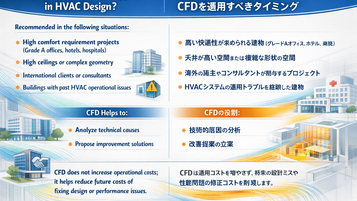
When Should CFD Be Applied in HVAC Design?
Not every project requires CFD (Computational Fluid Dynamics) analysis.However, CFD is highly recommended in the following situations: Projects with high...
View detail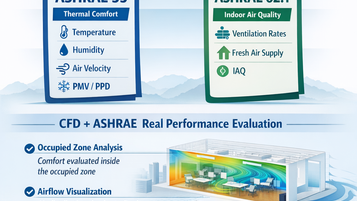
Why ASHRAE 55 & 62.1 Matter in HVAC Comfort Evaluation
In Vietnam, HVAC design is required to comply with national standards such as ASHRAE, QCVN, and TCVN. However, current Vietnamese...
View detail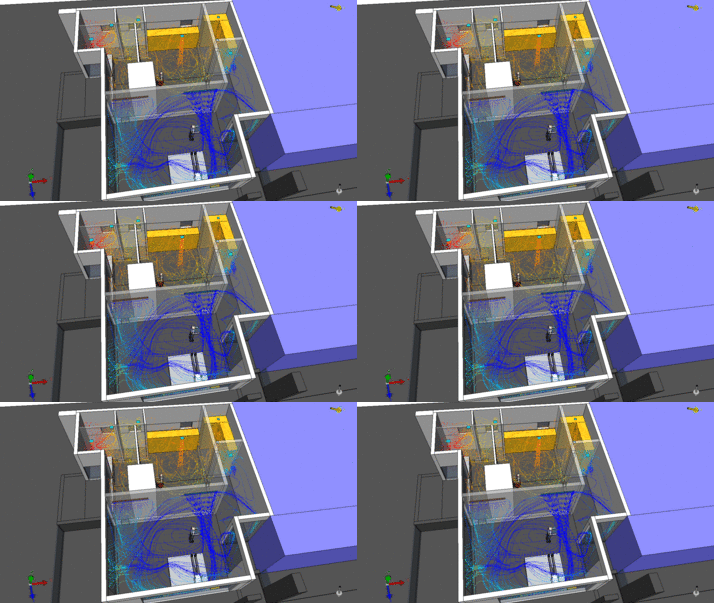
CFD in HVAC: Engineering Tool or Just Visualization?
Many people believe that CFD is used only to: Create colorful images for reports Provide visual illustrations for clients In...
View detail