

Many people believe that CFD is used only to:
-
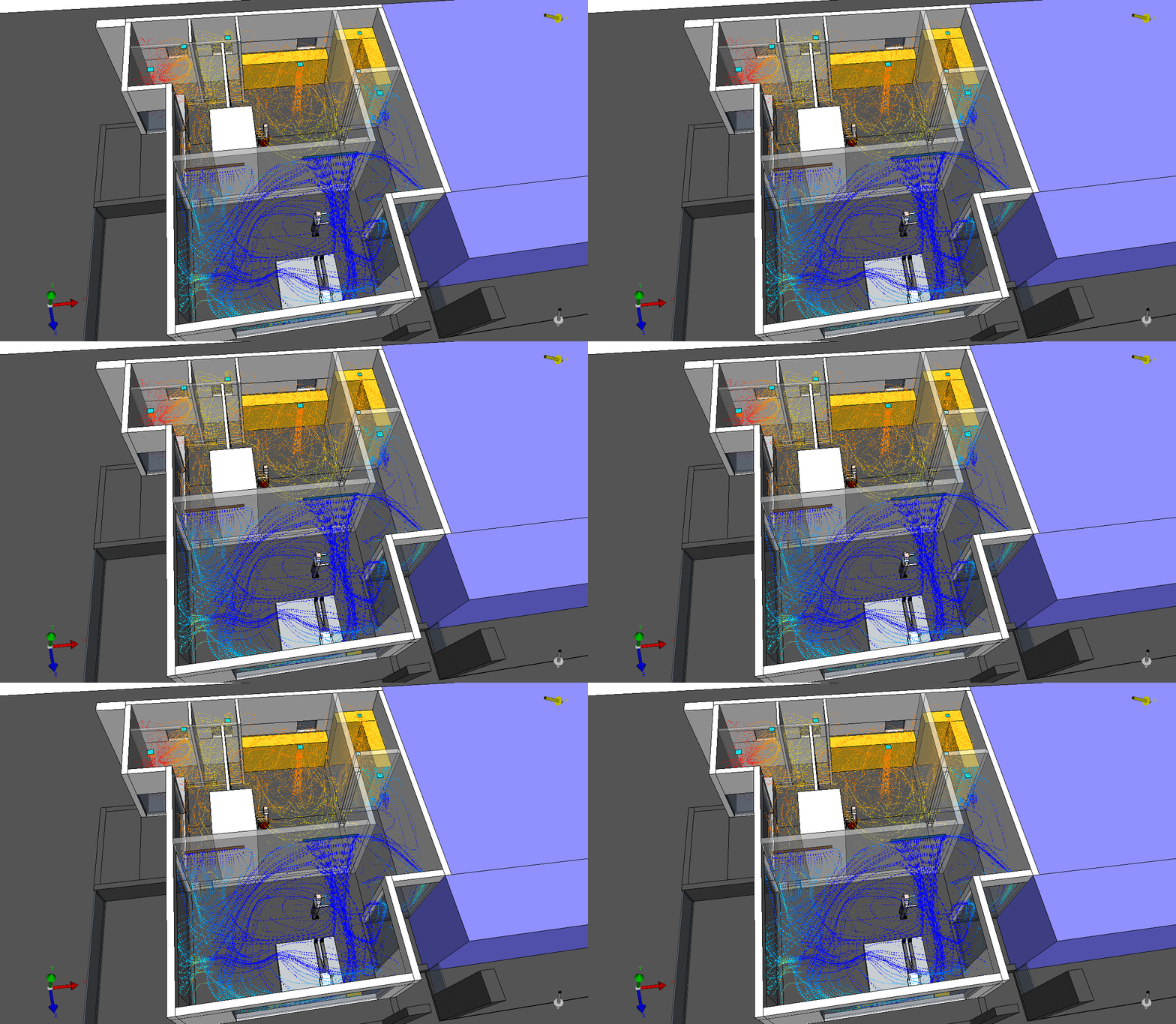
Create colorful images for reports
-
Provide visual illustrations for clients
In reality, when applied correctly, CFD is a powerful engineering tool that helps reduce HVAC operational risks.
Issues CFD Can Identify Early
CFD enables the early detection of risks that are difficult to capture using traditional calculation methods:
-
Fresh air short-circuiting without reaching the occupied zone
-
High air velocity causing draft discomfort
-
Uneven temperature distribution
-
Inappropriate diffuser and return air layout for the space geometry
What Defines a Proper CFD Analysis?
A meaningful CFD analysis requires:
-
Clear evaluation criteria linked to standards (ASHRAE 55, ASHRAE 62.1)
-
Focused assessment within the occupied zone
-
Conclusions on compliance with standards, not just visual results
At SAO, CFD is used as a technical verification tool, not merely for illustration purposes.
👉 Discover how SAO performs CFD analysis in compliance with ASHRAE standards.
Tags


Related news
How is a thermal comfort CFD project carried out?
An effective CFD analysis is not simply about running a simulation. It requires a clear workflow closely aligned with HVAC...
View detail
When Should CFD Be Applied in HVAC Design?
Not every project requires CFD (Computational Fluid Dynamics) analysis.However, CFD is highly recommended in the following situations: Projects with high...
View detail
Why ASHRAE 55 & 62.1 Matter in HVAC Comfort Evaluation
In Vietnam, HVAC design is required to comply with national standards such as ASHRAE, QCVN, and TCVN. However, current Vietnamese...
View detail